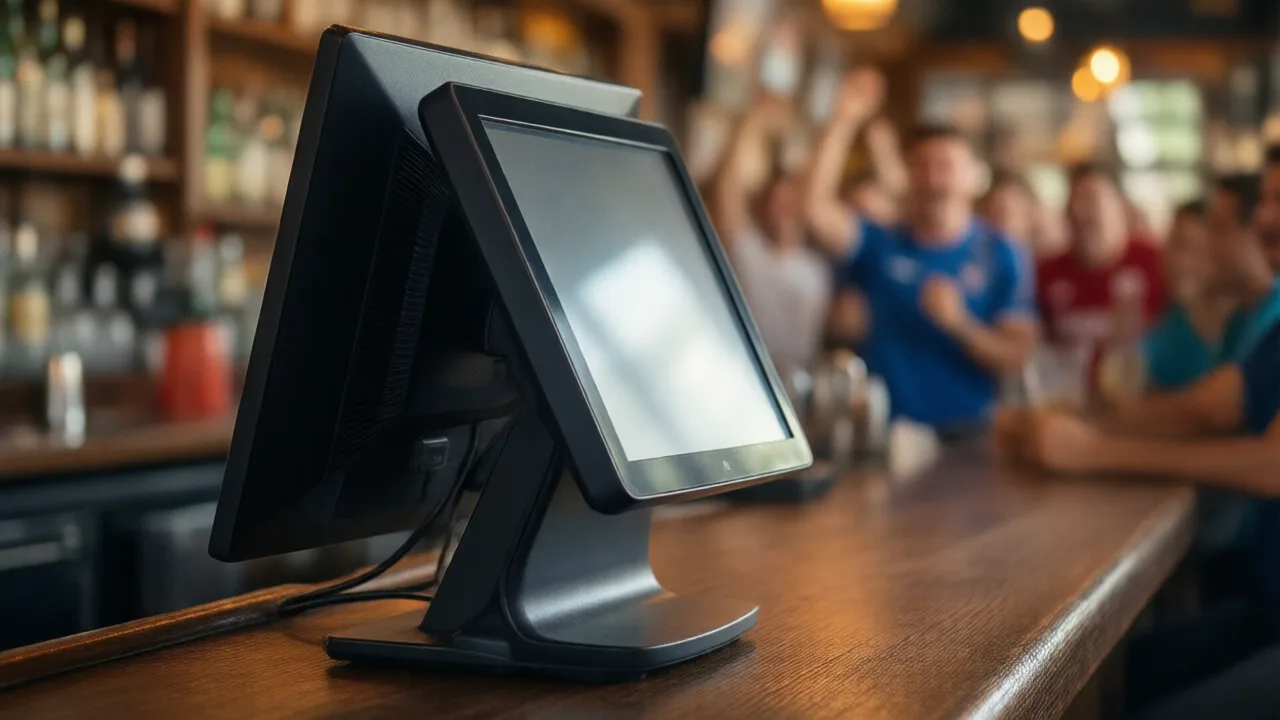
How POS Systems Held Up During World Cup 2026
The 2026 World Cup is over. For POS buyers, the lesson is not tournament trivia; it is a better vendor scorecard for restaurants that face event surges, phone pressure, order compression, and connectivity stress.
What the event changed in buyer scoring
Before July 2026, many POS demos still centered on interface polish. Event traffic moved the decision toward resilience. A buyer now has to ask what happens when phone orders spike, online pickup windows compress, the kitchen falls behind, and the internet connection becomes unreliable at the same time.
The strongest buying lesson is simple: a POS vendor should prove degraded-mode behavior, channel control, and closeout reporting before the contract is signed. A normal demo order is not enough.
Questions to ask vendors after the World Cup
- Phone pressure: can calls become clean POS tickets without staff retyping them?
- Order compression: can pickup windows, delivery throttling, and kitchen routing prevent a halftime-style backlog?
- Offline behavior: what exactly works when internet, Wi-Fi, payment gateway, printer, or one terminal fails?
- Reporting: can the owner separate event specials, channels, refunds, comps, labor, and payment exceptions the next morning?
- Support: who answers during local peak hours, and what issues are covered by the vendor versus the processor or integrator?
Buyer test script
| Scenario | Vendor must demonstrate | Evidence to keep |
|---|---|---|
| Phone surge | Call to order to kitchen ticket | Transcript, ticket, correction log |
| Halftime pickup | Capacity-aware promise times | Order timestamps and kitchen queue |
| Internet outage | Order entry, card rules, receipts, sync | Offline-mode documentation |
| Closeout | Sales, refunds, tips, channel mix | Sample export and report screenshot |
How to score vendors after event traffic
A post-event scorecard should distinguish recoverable friction from platform failure. Long kitchen times may be a staffing issue, but lost orders, missing timestamps, unclear refunds, processor confusion, and unsupported offline behavior are buying signals. The vendor should explain which parts of the event workflow the POS controls and which parts depend on third-party tools.
For renewal discussions, keep the evidence specific: the hour traffic peaked, which channel failed first, how long staff waited for help, whether closeout balanced, and whether the restaurant could export the data needed to understand the surge. That evidence makes the next POS conversation stronger than a general complaint about being busy.
What should change in the next demo
The next demo should start with the restaurant's worst hour, not a normal order. Ask vendors to show a delayed kitchen, a missed-call recovery path, a canceled online order, a partial refund, a printer failure, a terminal outage, and manager closeout after a high-volume window. If a vendor cannot reproduce those scenarios in a sales process, the buyer should not assume the system will handle them live.
A buyer should also ask how the vendor documents lessons after a surge. Useful answers include a support-ticket export, a timeline of order-channel volume, offline-card rules, failed-printer recovery notes, and a written recommendation for the next event. Vague answers like "the system is built for volume" do not give an owner evidence for renewal or replacement.
How to use the page now
Restaurants that run playoffs, concerts, festivals, conventions, school events, or seasonal peaks can use this page as a buying checklist. Ask every vendor to run the same surge scenario. If one vendor can show the workflow and another only describes it, the comparison becomes clearer.
DafaPOS should keep this page as a post-event buyer document, not a stale "summer is coming" article. The event already happened; the value is the purchasing lesson that remains.
What not to conclude
The World Cup did not prove that every restaurant needs the most expensive POS stack. It proved that buyers need to understand their own risk. A small cafe far from event traffic may care more about loyalty, mobile pickup, and payment simplicity. A stadium-area bar may care more about tab speed, offline cards, late-night support, and staff permissions. A delivery-heavy restaurant may care most about marketplace throttling and direct-ordering control.
That is why this article belongs on DafaPOS rather than a generic operations site. The reader is not being told what to run tomorrow. The reader is being told how to change the next vendor conversation so the purchase accounts for surge behavior before the restaurant is under pressure.
Evidence to save after a surge
- Sales by hour, order channel, tender type, item category, and discount.
- Refund, void, comp, cancellation, unavailable-item, and chargeback notes.
- Call logs, missed calls, online-order timestamps, and kitchen ticket timing.
- Staff notes from counter, bar, kitchen, pickup, delivery, and manager closeout.
- Support tickets opened with POS, processor, internet, phone, kiosk, or delivery vendors.
Build the next POS shortlist
Start with the buying mistakes checklist, the cloud versus hybrid comparison, and the AI proof checklist.